

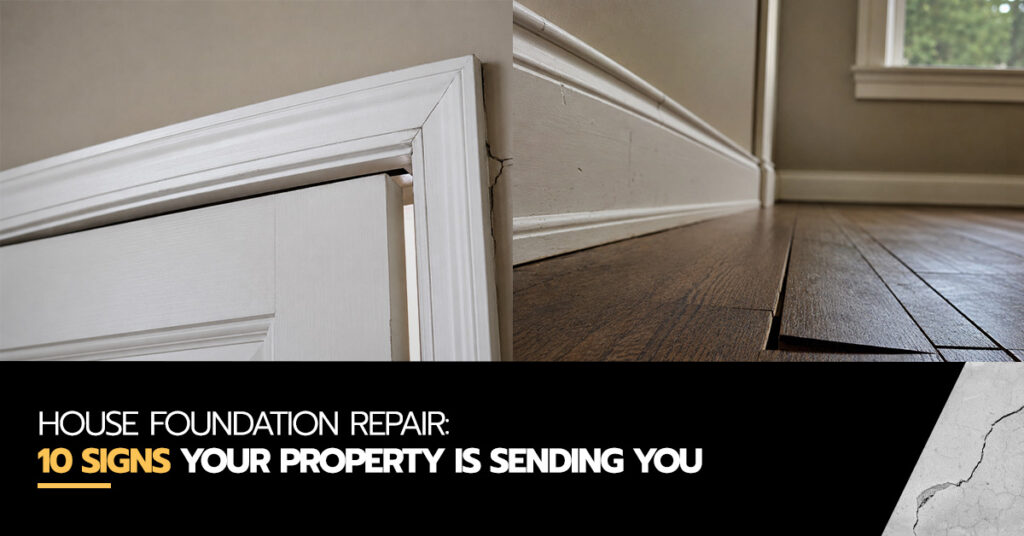
Home foundation repair is not always the first thing that comes to mind when you notice a crack, a door that no longer closes properly, or a small trace of moisture in the basement. Yet a home often speaks before the damage becomes serious. It does so quietly: a line in the concrete, a musty smell after the rain, a floor that seems less level than before, or a window that sticks when spring returns.
In Quebec, with freeze-thaw cycles, heavy rains, melting snow near the walls, and soil that shifts from one season to the next, foundations are under constant pressure. In Saint-Zotique, as in many residential areas of Montérégie, Vaudreuil-Dorion, Montreal, and the surrounding areas, it is important to recognize the warning signs.
Here are 10 concrete signs that may indicate that an inspection or foundation repair could be necessary.
Home Foundation Repair: Why Act Before the Damage Gets Worse?
A foundation is the silent base of your home. You do not think about it every day. You enjoy the living room, the basement, the yard, the garage, family evenings, and quiet weekends. But beneath all of that, the foundation supports the entire structure.
When a crack appears or a wall begins to move, the problem usually does not go away on its own. Water can seep in, the concrete can continue to weaken, and soil pressure can make the movement worse. The Government of Canada recommends inspecting cracks at least once a year and watching for moisture, especially after heavy rainfall and snowmelt.
At Les Fondations Nouvelle Génération, the goal is simple: clearly diagnose the situation, recommend the right solution, and help homeowners protect their property with long-lasting repairs.
1. Visible Cracks in Foundation Walls
Cracks are often the first sign. They can be as thin as a hairline or wider, vertical, horizontal, or stair-step shaped. A small dry crack does not always carry the same level of concern as a wet crack or one that is widening, but it should always be monitored.
Interior cracks can appear on walls, floors, or basement joints. When they allow moisture to pass through, solutions such as epoxy or polyurethane injection may be considered depending on the situation. For exterior cracks, excavation, sealing, and the addition of a waterproofing membrane may sometimes be necessary.
2. Stair-Step Cracks in Brick or Concrete
A stair-step crack often follows the mortar joints between bricks or blocks. It stands out because it forms an irregular pattern, like small steps climbing along the wall.
This type of crack may be related to foundation movement or localized settlement. It should not be ignored, especially if the crack changes over time, exceeds a few millimeters, or is accompanied by moisture.
3. Doors and Windows That No Longer Close Properly
A door rubbing against the floor. A window that stuck a little in winter and then becomes hard to open in spring. A frame that seems slightly out of square.
These small everyday annoyances can sometimes reveal movement in the structure. Of course, a door can also shift because of indoor humidity or normal wear. But when several doors or windows become misaligned at the same time, it is better to look deeper.
4. A Floor That Seems Sloped or Sagging
You walk down the hallway and feel like the floor slopes slightly. A marble would almost roll by itself toward one corner of the room. In an older home, some movement may be related to the age of the building, but a noticeable or recent sag deserves serious attention.
A sloped floor can indicate a support, structural, or foundation issue. The more visible the sign is, the more important it becomes to get a clear diagnosis.
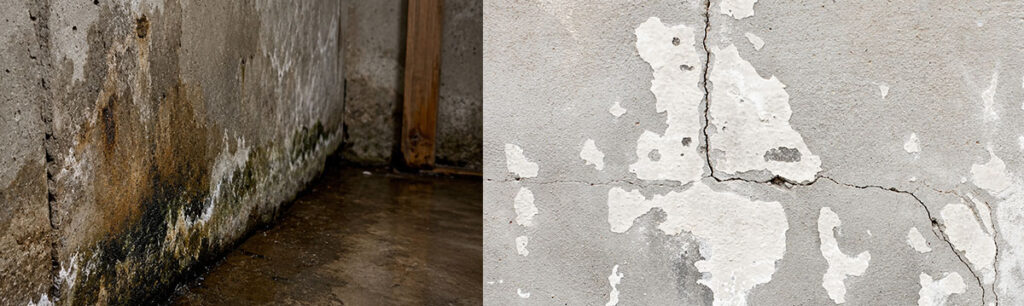
5. Water or Moisture in the Basement
After heavy rain, snowmelt, or a period of saturated soil, you notice a puddle, a dark mark at the bottom of the wall, or a damp basement smell. This is not just unpleasant: it is often a sign that water is finding a way inside.
Infiltration can occur through a crack, a joint, a failing drain, or a poorly protected area. Les Fondations Nouvelle Génération provides services such as crack repair, foundation waterproofing, and interior or exterior drainage, depending on the nature of the problem.
6. Bowed or Bulging Basement Walls
A foundation wall that leans inward or appears to bulge is a more concerning sign. This movement may be caused by soil pressure, hydrostatic pressure, poor drainage, temperature changes, or settlement.
At Les Fondations Nouvelle Génération, bowed walls are among the issues handled by the team. Reinforcement solutions, such as carbon fiber straps in certain cases, can help stabilize the wall and reduce the risk of the movement getting worse.
7. White Stains, Bubbling Paint, or Moisture Marks
Moisture does not always appear as a puddle. Sometimes it leaves whitish deposits on concrete, bubbling paint, crumbling lower walls, or a persistent smell.
These signs may indicate that water is moving through or around the foundation. Even if the basement still seems usable, these warning signs should be taken seriously, especially if you use the space as a family room, office, storage area, or extra bedroom.
8. A Chimney, Porch, or Addition Pulling Away
When a chimney, porch, exterior staircase, or addition appears to be separating slightly from the main building, there may be differential movement. This means that one part of the structure is not moving exactly like the rest of the house.
This type of sign can be subtle at first: a joint that opens, a gap that forms, or a line that was not there the year before. An inspection helps determine whether the problem is localized or related to the foundation.
9. Cracks That Widen Over Time
A stable crack does not carry the same level of urgency as an active crack. If you notice that it is getting longer, wider, or changing direction, it is time to take action.
A simple method is to take dated photos or make a small pencil mark at the ends of the crack. If it extends beyond the mark after a few weeks or months, the foundation is likely still moving.
10. A General Feeling That “Something Is Shifting”
Sometimes it is not one single sign that causes concern, but the whole picture: a basement crack, a door that no longer closes properly, a musty smell, a small leak after rain, or a wall that seems less straight.
This is often when a homeowner says, “I should get this checked.” And they are right. An inspection is not only about confirming a problem; it can also provide reassurance, help prioritize the work, and prevent higher costs later.
Les Fondations Nouvelle Génération in Saint-Zotique: Local Expertise to Protect Your Home
Based in Saint-Zotique, Quebec, Les Fondations Nouvelle Génération helps homeowners protect their properties against cracks, water infiltration, bowed walls, drainage issues, and foundation-related damage.
The team uses a practical approach: inspection, assessment of severity, selection of the right method, and a clear estimate. Depending on the case, solutions may include epoxy or polyurethane injection, exterior repair, a waterproofing membrane, drainage work, or structural reinforcement.
In a region where homes live through changing seasons, spring snowmelt, sudden rains, and demanding winters, a solid foundation is more than a technical detail. It is what allows you to enjoy your home with peace of mind.
When Should You Request an Inspection?
It is recommended to request an inspection when you notice:
- a crack that is widening;
- water infiltration;
- a bowed or leaning wall;
- several misaligned doors or windows;
- a sagging floor;
- a persistent musty smell;
- signs that return after every rainfall or snowmelt.
The earlier the diagnosis is made, the easier it is to choose a targeted solution. A quick intervention can also help prevent the issue from affecting the basement layout, flooring, resale value, or your peace of mind.
Protecting Your Home Means Protecting Your Everyday Life
A home is not just a structure made of wood and brick. It is the place you return to after a day of work, where children play in the basement, where you store memories, tools, holiday decorations, and tomorrow’s projects.
When the foundation shows signs of fatigue, there is no need to panic. You need to observe, document, and contact professionals who can provide an accurate diagnosis.
For personalized advice or an estimate, homeowners can contact Les Fondations Nouvelle Génération in Saint-Zotique. A good repair always begins with a clear understanding of the problem.
FAQ – Home Foundation Repair
1. What are the most common signs of a foundation problem?
The most common signs are cracks in foundation walls, water infiltration, bowed walls, doors or windows that no longer close properly, sloped floors, and stair-step cracks in brickwork.
2. Is a small foundation crack dangerous?
Not always. Some cracks may be superficial. However, a crack that widens, lets water in, is horizontal, or forms a stair-step pattern should be inspected quickly.
3. When should home foundation repair be done?
Repair should be considered when the crack is active, when there is water infiltration, when a wall is moving, or when several signs appear at the same time. An inspection helps confirm the best solution.
4. Can a foundation crack be repaired without excavation?
Yes, in some cases. Interior cracks can sometimes be repaired with epoxy or flexible polyurethane injection. Exterior cracks or water-related issues may, however, require excavation and waterproofing.
5. Why choose Les Fondations Nouvelle Génération?
Les Fondations Nouvelle Génération offers specialized services in crack repair, waterproofing, drainage, bowed walls, and other foundation-related work. The team supports homeowners with solutions adapted to their property and their situation.