

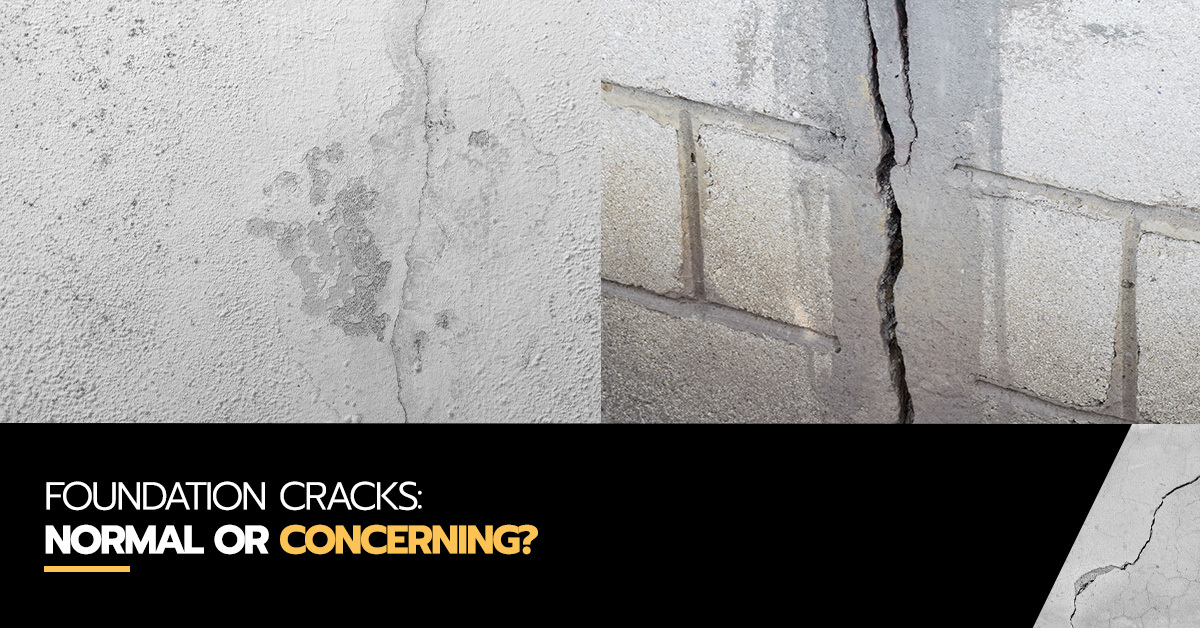
When a crack appears in your basement, it’s hard not to worry. Is it just a normal movement of the building… or a serious issue threatening the structure? Foundation crack repair is often urgent, but you first need to distinguish between harmless cracks and those requiring immediate attention.
Imagine your home in Saint-Zotique, standing strong despite harsh Quebec winters and temperature fluctuations. Yet beneath the surface, the ground shifts, moisture seeps in, and the foundation moves. Some cracks are normal. Others are not.
Here’s how to tell the difference — no guesswork involved.
Foundation cracks: normal or concerning?
Not all cracks mean disaster. A home, especially in Quebec, constantly experiences freeze-thaw cycles, soil movement, and moisture variations.
Normal cracks (to monitor, but not urgent)
These types of cracks are common:
- Hairline cracks (less than 2 mm)
- Vertical cracks
- No water infiltration
- No visible progression over time
In practical terms, a small straight line on a concrete wall that hasn’t changed for months usually isn’t an immediate concern.
These cracks are often caused by concrete shrinkage during curing or minor natural ground movement.
Dangerous cracks: don’t ignore them
This is where things get serious. Some cracks clearly indicate structural issues or water infiltration risks.
Warning signs to watch for
- Wide crack (more than 3 mm)
- Stair-step crack (in block joints)
- Horizontal crack
- Visible water infiltration
- Rapid progression (getting larger)
- Doors or windows sticking
A real-life example: after a harsh winter in Montérégie, you notice a horizontal crack with slight wall bulging. At that point, it’s no longer cosmetic — it may be structural.
Types of cracks: what they mean
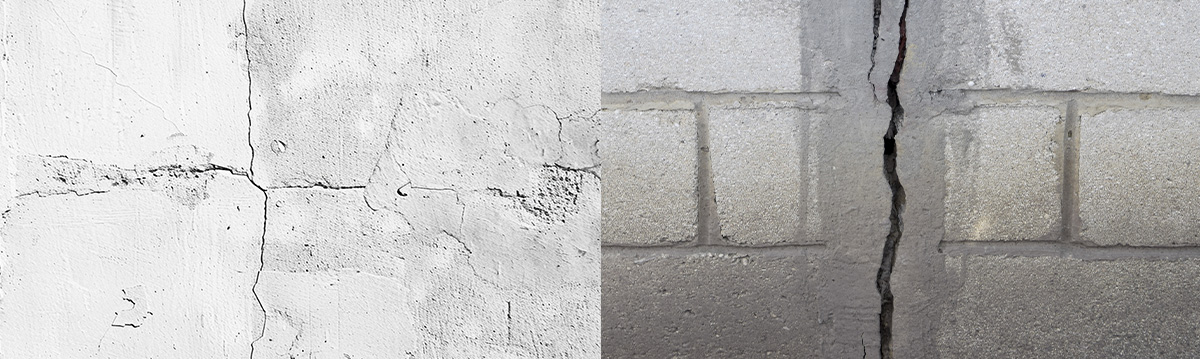
Vertical crack
- Usually harmless
- Caused by concrete shrinkage
- Easy to repair
Horizontal crack
- High risk
- Soil pressure or drainage issues
- May indicate wall deformation
Stair-step crack
- Ground movement
- More serious foundation issue
- Professional intervention recommended
Active crack
- Still moving
- Must be stabilized quickly
Foundation crack repair: what are the solutions?
Epoxy or polyurethane injection
- Most common solution
- Effective sealing
- Suitable for non-structural cracks
Structural repair
- Required for serious cracks
- May include reinforcement or stabilization
- More extensive work
Drainage and waterproofing
- Addresses the root cause (water, pressure)
- Essential long-term solution
Important: repairing a crack without fixing the cause usually means the problem will return.
Why do cracks appear in Quebec?
Local conditions play a major role.
Main factors:
- Intense freeze-thaw cycles
- Clay soil (common in Montérégie)
- Poor drainage
- Concrete aging
In Saint-Zotique, between the St. Lawrence River and seasonal changes, conditions are ideal for foundation stress.
Les Fondations Nouvelle Génération in Saint-Zotique: local expertise
When a crack appears, the worst thing you can do is wait.
Les Fondations Nouvelle Génération, based in Saint-Zotique, Quebec, understands the realities of the local environment. Working here is very different from working in a more stable climate.
Their approach is simple:
- Accurate diagnosis
- Tailored solutions (no one-size-fits-all)
- Long-lasting results
Whether you’re near the water or in a quiet residential neighborhood, every foundation has its own challenges.
When should you act immediately?
Be clear: you need to act fast if:
- Water is entering
- The crack is widening
- The wall appears to be shifting
- You notice multiple cracks at once
Waiting in these situations increases both cost and risk.
How to prevent cracks
While not everything is controllable, some actions help:
- Ensure proper drainage around the home
- Clean gutters regularly
- Direct water away from the foundation
- Inspect your basement regularly
A simple visual inspection twice a year is often enough to catch issues early.
Conclusion: don’t take chances
A crack is never trivial. Sometimes harmless, sometimes critical — but never something to ignore.
The right approach:
- Observe
- Understand
- Act at the right time
If you’re in Saint-Zotique or anywhere in Montérégie, contact a specialist like Les Fondations Nouvelle Génération. You’ll get a clear diagnosis and practical solutions.
It’s always better to act early than to deal with major foundation damage later.
FAQ – Foundation crack repair
1. Is a foundation crack always serious?
No. Fine, stable cracks are often normal. Wide or horizontal cracks are more concerning.
2. How much does foundation crack repair cost?
Costs vary depending on severity. A simple injection may cost a few hundred dollars, while structural repairs can be significantly more.
3. Can a crack let water in?
Yes. Even a small crack can lead to water infiltration, especially in spring or during heavy rain.
4. Can I repair a crack myself?
Not recommended. Without proper diagnosis, you may hide a more serious issue.
5. How long does a repair take?
An injection can be completed in a few hours. More complex work may take several days.